
 Seth Godin points us to research supporting the power of short, easy-to-read sentences in this post: The secret of writing to be readI couldn’t help but think about the relevance to resume writing. I frequently see resumes that are trying so hard to sound intelligent, but the end result is a crammed, verbose resume that is fated to land in the “Resume Reject” pile.Plus, hiring managers almost always skim through resumes on the first pass — they aren’t able to digest a resume that is more like a wordy novella.Are there areas on your resume that can be simplified? Make your sentences more reader-friendly, and you just might nab a few more job interviews.All the best,Kim Isaacs
Resume Writing Tip: Be Concise
Career Change Resume Magic
 Some resume writers don’t recommend creating a targeted resume version for each career goal, but I believe this is necessary for people in career transition. The job of a career change resume is to convince hiring managers that the applicant has what it takes to succeed in a new career. How can that be done with a “one-size-fits-all-jobs” resume?It takes a lot of research, reflection, and marketing savvy to create a resume that will open doors to new careers. One came across my desk yesterday, and even though it was written by the brilliant resume writer Karen Hofferber, it still blew me away. The client owns a medical billing practice, but wanted to pursue a development job at her children’s school where she had been volunteering for many years. When I reviewed her new resume, I thought, “POOF! You’re a development specialist!”Want to make sure your career change resume is going to cut it? Here are a few of Karen’s strategies that should work for you:1. Add a targeted, job-specific career goal. The top of the client’s resume has a big banner that says, “Goal: Development Manager — ABC School.” So there’s no confusion about what she wants to do from the start of the resume.2. Write a dynamic qualifications summary. Focus on the skills and accomplishments that are relevant to the new goal. It helps to research and study the job description (or a job description for a similar job) to see the employer’s requirements for the position, and then sculpt your own description proving the value that you offer.3. Add a skills section. A bulleted list of skills/keywords helps hiring managers quickly see that you have the requisite skills for the job. Omit skills that you use in your current job that are unrelated to your new goal. This client had excellent medical billing skills, but they were left out of the skills section to make room for development-related skills.4. Emphasize related work, even if it’s volunteer experience or hobbies. Karen created a “School Development Experience” section that highlights the client’s achievements through her volunteer work. It is formatted like a regular job, and shows the value that she has already brought to the school through her fundraising efforts, relationship-building with parents and teachers, and proven success organizing school events. Just because she wasn’t paid doesn’t make the experience any less valuable!5. Draw out transferable skills from unrelated jobs. This client’s paid experience doesn’t appear until page two of the resume, but when it does appear, the reader gets a strong dose of transferable skills that are relevant to her new goal. The description of her business management role focuses on communication skills, project management accomplishments, customer service delivery, and excellent organizational skills. She doesn’t just say she has these skills, she provides examples of positive business outcomes and benefits that resulted from her using these skills.6. Show your passion in your cover letter. This client’s letter was so compelling, I said I would eat my hat if the client didn’t get the job. Forget looking at cover letter samples and copying verbiage — speak from your heart and reveal your passion for your new career. Make a clear case for how you would benefit the employer if given a chance, and let your enthusiasm shine through.To your success,Kim Isaacs
Use a Professional Email Address to Send Your Resume
 Job seekers are starting to realize the importance of personal branding, ensuring all aspects of their brands are consistent and strong. Occasionally, I do find people who are ruining their chances from the get-go by using inappropriate email addresses. For example, my aunt forwarded an email from a health aide who responded to a job ad requesting care for my 92-year-old grandmother. We are desperate to find a competent aide, but the applicant’s email address is something like, villain666@somewhere.com. My aunt asked, “Do I dare respond to someone who says she is a caring female, with the name she chose for email?” The first images that came to my mind were scenes from those undercover Dateline reports on the terrible treatment of the elderly.Maybe this applicant is not as devilish as her email address implies. But we’ll never know.What does your email address say about you? Make sure it’s professional, either using your name or incorporating your career goal (e.g., “topsalesperson2007@…”). You can set up an email address using a free service like Gmail or Yahoo and use it for all job search correspondence.Best wishes,Kim Isaacs
Cover Letter Tip for New Bank Tellers
 John writes, “I’m trying to get a job as a bank teller, but I have no experience in this field. What should I say in my cover letter?”Kim’s Answer: Your cover letter needs to prove that you have what it takes to be a bank teller. Start by researching bank teller jobs (you can search for bank teller jobs on Monster) and figuring out what employers look for in their ideal employees. Customer service, communication, basic math, accuracy/attention to detail, honesty, and integrity are a few of the skills you’ll find are important. Write down a list of your matching credentials and weave them into the cover letter.Keep in mind that many banks provide training to entry-level tellers, so it’s up to you to convey that you’re a fast learner and have the basic skills to do the job.Best wishes,Kim Isaacs
Follow Your Passion…Through Good Times and Bad
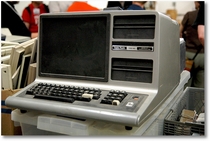 My first computer was a RadioShack TRS-80. When my father brought the computer home and plopped it on the dining room table, my love affair with computers began. Visitors to our house didn’t know what the monstrosity was, but I spent my spare time eagerly typing programs and testing its capabilities.I was happy as a clam, until it happened. I had devoted countless hours entering data for an MS-DOS “guess the state capital” program and must have been on line number 20,040 or so when “blammo” — the screen went dead and I was left staring at my faint reflection in the blackness of the screen.
This was no namby-pamby, modern day blue screen of death (BSOD). Computer crashes are annoying, but expected, on today’s PCs. This was far worse. My first experience with a computer crash took me by surprise, and the incident almost ended my love of computers. Indeed, the “stupid thing” (my new nickname for the computer) had no recollection of the data I had entered for days on end.
I thoughtfully deliberated about what I should do, asking friends for advice about whether or not I should give the computer a second chance. People didn’t understand my dilemma, even when I cried about what line number I was up to before the screen went blank. The computer sat in an “off” position for days, perhaps remorseful that it had betrayed me.
But I was transfixed by the computer, and it was just a matter of time before it would lure me in and I would click the “power” button again. When I did, it was like reuniting with an old friend. I never did re-enter the state program (“Fool me once, shame on you. Fool me twice, shame on me”), but I moved on to other, more fun programs and cultivated a passion for technology that has lasted for 30+ years (I was just a baby when I got the TRS-80, ha ha).
Love, betrayal, breakups…did you notice the correlations with human relationships? I realize computers can’t feel (or can they?), but that’s what work should feel like — something that you are so passionate about, you realize you can’t live (or don’t want to live) without it. Work might not be all roses and daisies all of the time, and there will be obstacles and maybe even doubts, but it’s your passion for your career that will fuel your day-to-day happiness and ultimate success.
What about you? Have you faced career obstacles, but were able to get back on track to pursue your dreams? If so, drop me a note or a comment, I would love to hear from you!
Best wishes,Kim Isaacs
Photo by Jeff Kubina via Flickr. Licensed under Creative Commons. Thanks, Jeff!
Workers: Study Shows You are Happy
 In the resume business, we’re used to hearing from dissatisfied workers eager to find better jobs, so it seems like everyone hates going to work. Not so, according to a recent study by the University of Chicago’s National Opinion Research Center. The study revealed that 86 percent of workers are satisfied with their jobs. Plus, the job satisfaction rate has been high since the survey began in 1972. That’s great news, because life can be miserable if going to work is misery. Now that’s something to celebrate this Labor Day!Make it a safe one,Kim Isaacs
Cover Letter Tip: It’s Not About You
I saw one of my favorite country singers — Toby Keith — rock the house in Hershey, PA this summer. He sang one of his crowd-pleasing hits, “I Wanna Talk About Me”:
“I wanna talk about me
Wanna talk about I
Wanna talk about number one
Oh my me my
What I think, what I like, what I know, what I want, what I see
I like talking about you, usually, but occasionally
I wanna talk about me
I wanna talk about me”
That’s the song that most people seem to be listening to when they write their cover letters. I discussed the importance of getting in the hiring manager’s head in a previous blog post, but I still see cover letters that are completely focused on the writer and not the reader.
Busy hiring managers scouring an inbox full of resumes don’t care about “I did this” or “I’m so great because…” — they want to know how the job applicant will help them solve some sort of problem. Maybe that’s expanding a territory, or creating a smooth-running office, or making sure their students reach their potential — your letter should address whatever the goal is for the position.
The best way to do this is to step out of your shoes and put on the hiring manager’s shoes. Think about what the manager wants in a new-hire, how you will be able to deliver, and the ways in which you will help the organization achieve its goals. If you wear the manager’s shoes even briefly, you can begin to see the problem through their eyes and craft a letter that’s focused on the employer, and not you.
Is it Time to Update Your Resume?
 I don’t ask for much, really I don’t. But one thing I ask is this:
Please update your resume!
How long has it been? Six months? A year? If you don’t know the answer or you’re mentally traveling back to a long-forgotten, distant past, then it’s time to update your resume. I can’t tell you how many clients contact us in a panicked state and request a resume update ASAP (i.e., yesterday) because a great opportunity came along and their resumes haven’t been updated since the Reagan Administration.
Resume emergencies can be avoided if you keep your resume up-to-date and add new accomplishments as they happen. I recommend thoroughly reviewing and updating your resume quarterly, and the change of seasons is a good reminder to tackle this arduous task. If that seems too much, at least update your resume right after you change your smoke detector batteries twice a year for Daylight Saving Time.
Best wishes,
Kim Isaacs
Cover Letter Tip: Male or Female?
 How do you handle the cover letter salutation when the hiring manager’s first name doesn’t indicate a clear gender? The best bet is to find out for sure, like by contacting the employer (ask a receptionist – you can be anonymous!) or doing a Google search. Digital Inspiration suggests another way – doing a name search on Facebook and seeing which gender is prevalent in the search results. Here’s a link to the Digital Inspiration post:“Is This Person Male or Female? Identify Gender from the Name”Amit Agarwal cautions that this technique is not foolproof. If you’re not sure, you can use the first and last name in the salutation without specifying a gender, like this: Dear Praveen Gupta:Best wishes,Kim Isaacs
Sabbatical Solutions for Your Resume
 Did you take a sabbatical and are now wondering how to include the time off on your resume? I interviewed career expert Ford R. Myers for an upcoming article on this topic, and he provided excellent advice. According to Ford, “Handle the sabbatical very carefully, with forethought and planning. Tie the experience in to your long-term career path, and find a way to express to the employer that even though this was not paid experience, it was still professionally motivated and enriching.” Thank you, Ford!Here are examples of how to explain a “forced” sabbatical (AKA “layoff”) in a resume and cover letter, provided by certified resume writer Karen Hofferber:Sample sabbatical listing on a resume:Sabbatical, 5/06 to 8/07Used 15 months provided by severance package to recharge, develop personal interest in photography, and give back to the community. Attended MFA program, traveled throughout Africa on two photo safaris, published photographs in several local magazines, and served as a volunteer on two Habitat for Humanity home-building projects.Sample sabbatical explanation on a cover letter:“Although my performance was rated highly by my most recent employer, my position was eliminated following a corporate-downsizing initiative. In the ensuing months, I’ve returned to school to become more proficient in emerging technologies. I completed a series of courses in ecommerce applications and website design, and I am eager to leverage my new skills for my next employer…”Best wishes,Kim Isaacs